
Program Overview

Expanding BC’s trade relationships helps diversify the sector, open new opportunities and support forest sector employment. Recognizing the importance of the North American market, FII also invests in high-potential market segments to grow demand for BC wood products closer to home.

The Market Initiatives program is primarily focused on advancing opportunities in existing markets such as China, Japan, South Korea, India, Vietnam and the UK, where the greatest short- and medium-term opportunities exist for the sector. Most of these market development efforts are delivered by forest sector trade associations, with cost-shared funding support from FII and industry.

Photo: This is Me | Credit: Fuji Realty Co., Ltd.

Funding Priorities

Through our Market Initiatives program, FII seeks to:

Position British Columbia as a global supplier of world-class environmentally friendly forest products.

Actively maintain, create and diversify demand for BC forest products in Canada and in key markets.

Help break down non-tariff trade and market barriers to ensure opportunities for BC forest products.

Work with the forest industry to promote BC’s forest products and forest management to the global marketplace.

Help ensure that the forest sector continues to be a leading contributor to the BC economy.

Research opportunities in emerging and potential future markets and initiate early market development activities.

Support industry trade associations in developing and/or expanding markets and market segments for BC forest products.

Support industry efforts to mitigate market access and address non-tariff barriers.

Funding Process

Each year, FII manages a Calls for Proposals for the Market Initiatives program, which typically opens in late fall. Though this year’s call is now closed, we invite you to review our process and eligibility information in preparation for next year.

  1. 1.

    Please review all eligibility requirements below carefully to determine whether your organization may apply for funding.

  2. 2.

    After reviewing our eligibility requirements, please set up a user account within our Recipient Funding Management System below, where you may review further details on our funding process and submit your application when the next Call for Proposals opens.

  3. 3.

    Once you are registered within our Recipient Funding Management System, you will have access to a variety of information and resources that will help you to submit an application that meets the criteria of FII and our funding partners. Applicants are strongly encouraged to review all resources thoroughly before submitting their applications.

  4. 4.

    If you have any questions regarding the Call for Proposals process, please email us at info@bcfii.ca.

Eligibility

Please review FII’s eligibility information below to determine eligibility. Please note, FII does not provide loans, grants or subsidies. Funding is not meant to support an individual firm’s activities but rather to benefit sub-sectors or the BC forest sector as a whole.

Those who are eligible to apply for funding under our Market Initiatives program include:

  • Groups or associations representing multi-company interests and serving the objectives of a large geographic area or the majority of producers of a specific species or product category.
  • Academic/research institutions including universities, colleges, and trades.
  • First Nations regional Tribal Councils and Indigenous non-profit organizations.
  • BC Government Ministries/Agencies and Municipal non-profit organizations.
  • Preference is given to BC organizations, but applications will be accepted from organizations headquartered outside of BC where clear and specific benefits to the BC industry can be demonstrated.

Applicant Information

FII provides guidance and support to applicants for its annual Call for Proposals. If you wish to obtain further resources in preparation for your submission, please visit the Call for Proposals page.

Market Initiatives Investment Strategy 2026-27

Market Initiatives Recipients

At FII, we are proud to support a wide variety of organizations under the Market Initiatives program that work towards our common goal of advancing BC’s forest sector. We invite you to browse our 2026/27 Market Initiatives funding recipients.

Featured Projects

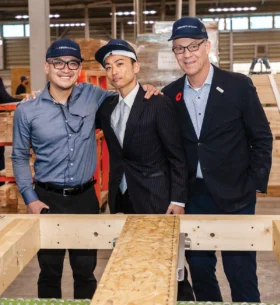
Three visitors wearing branded caps stand beside a wood-framed structural wall assembly inside a manufacturing facility, with engineered wood components and production equipment visible in the background.

Narrow shear wall outperforms seismic targets (Japan)

To address the growing pressures of building housing on smaller, narrower urban lots and the need to ensure that Japan’s Building Standard Law seismic performance requirements are met, Canada Wood Japan has developed and successfully tested an innovative narrow shear wall measuring 300 mm wide—one-third the width of the typical 910 mm shear wall. Despite its compact width, it outperforms the seismic requirements of Japan’s building code. This makes it one of the narrowest high-performance shear walls under development for residential construction—and demonstrates that a system built with Canadian lumber and oriented strand board (OSB) can satisfy some of the world’s strictest building codes. The thinner size also increases the available interior space and layout options for new builds.

Photo: Canada Wood

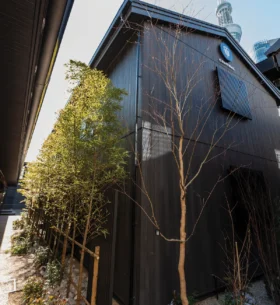
Exterior of a black wood-clad building at the T-home KEI Hotel in Tokyo, framed by landscaped trees and shrubs.

Expanding wood’s role in Japan’s hospitality sector (Japan)

Canada Wood Japan is leveraging a surge in tourism-driven construction demand to position B.C. wood products and expertise as a top choice for low- to mid-rise hotel development.

A decade of significant tourism growth—rising from 13.4 million inbound visitors in 2014 to 42.7 million in 2025, with government targets of 60 million by 2030—has created an acute accommodation shortage. Current projections suggest a deficit of 300,000 to 400,000 rooms nationwide. Wood construction offers clear advantages in speed, design flexibility, carbon performance and seismic resilience; however, it is underused in hotel and hospitality buildings.

To capitalize on the current surge in hospitality construction, Canada Wood Japan is engaging directly with developers, builders, architects and construction firms to position wood as an alternative to steel and concrete and build confidence that it is a practical, scalable solution.
This engagement combines targeted outreach, technical discussions and project-level collaboration. A central element is the development of a suite of non-residential 2×4 case studies, including hospitality projects, that demonstrate how light-frame and hybrid wood systems can meet Japan’s structural, fire and durability requirements.

T-home KEI Hotel

The T-home KEI Hotel in Tokyo integrates traditional Japanese design with modern wood construction, consisting of six two-storey buildings built entirely of wood, using 419 m³ of timber, including 242 m³ of S-P-F dimension lumber. Constructed by Mitsui Home, this project illustrates how the long-term collaboration between Canada Wood and Japanese industry partners results in tangible outcomes and opportunities for Canadian forest product exporters.

Photo: Canada Wood

Participants gather behind two representatives holding signed agreements during a memorandum of understanding signing ceremony, with Canadian and Korean flags displayed on a table beneath an event banner.

Strategic partnership with Korea’s largest public housing provider (South Korea)

A growing partnership positions Canadian wood solutions at the centre of South Korea’s shift to lower-carbon and higher-density housing.

New government policies are promoting prefabricated off-site building to address labour shortages and improve construction quality. These policies create a significant opening for wood, as prefabricated wood systems can accelerate and streamline the construction process.

Korea Land and Housing Corporation—the country’s largest public housing provider and one of its most influential construction authorities—is advancing this agenda by studying the use of wood panelization as an alternative to precast concrete in off-site construction. If implemented, the impact on wood demand could be significant, opening opportunities across a large share of Korea’s multi-family and higher-density housing markets.

This work was advanced significantly during the forest sector Asian mission in November 2025 with the signing of a trilateral MOU between Canada Wood, FII and the Korea Land and Housing Corporation’s research arm, the Land and Housing Research Institute. The MOU establishes a platform for technical co-operation to introduce and scale Canadian wood construction systems in Korea, with a focus on energy efficiency, environmental performance, and seismically resilient and fire-safe building solutions.

Priority initiatives include validating two-hour fire resistance for wood frame walls, floors and cross-laminated timber (CLT) assemblies; meeting Korea’s stringent sound requirements; developing CLT engineering and permitting models; and establishing off-site construction-based wall, floor and roof systems suitable for public housing.

Photo: Canada Wood

Delegates tour an exhibition on construction and building development, viewing displays and presentation materials related to building projects and wood construction.

Deepening partnerships to build support for wood (China)

FII is strengthening long-term relationships with national and provincial authorities to position wood as a practical and scalable solution that supports China’s low-carbon and green building goals.

Renewed MOU creates new pathways for wood construction

Canada-China co-operation on wood construction is anchored by a tri-party Memorandum of Understanding (MOU) between Natural Resources Canada, the British Columbia Ministry of Forests, and China’s Ministry of Housing and Urban-Rural Development (MOHURD) that was first signed in 2010.

Under the renewed MOU signed in January 2026, FII China and Canada Wood will lead policy and technical exchanges on embodied carbon accounting, procurement levers for low-carbon materials, and regulatory frameworks for tall and complex wood and hybrid buildings. This next phase of co-operation will also prioritize market readiness support through technical guidance, training and compliance pathways for engineered wood systems.

Since 2010, FII China and Canada Wood have worked with MOHURD—the central authority responsible for construction policy, codes, standards and market regulation—to align timber construction with China’s climate and modernization goals. Together, they have contributed to more than 125 codes, standards and technical practices that support the broader use of wood in China’s construction sector.

Photo: Minister of Energy and Natural Resources Tim Hodgson and MOHURD Minister Ni Hong at the Better Housing Exhibition, where they toured the show floor following the signing of the renewed MOU. The Government of British Columbia represented by Minister of Forests Ravi Parmar is a signatory to the MOU.

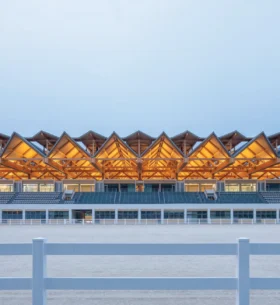
An equestrian centre featuring an illuminated mass timber roof structure with exposed wood beams and repeating triangular forms above spectator seating.

Glulam takes centre stage in landmark buildings (China)

Wood has scaled up in a big way. No longer limited to niche projects, glulam now features in some of China’s most visually striking buildings. Since 2010, more than 460 signature timber projects have been completed across 30 provinces. Canada Wood China has helped enable this growth, supporting building code development, showcasing demonstration projects, advancing glue-laminated timber certification, and training local engineers.

Although Canadian Douglas-fir has emerged as the preferred glulam species, Canada Wood is expanding its focus to position western hemlock for broader use through research, standards development and new demonstration projects.

Photo: Shenzhen Guangming International Equestrian Centre | Credit: Canada Wood

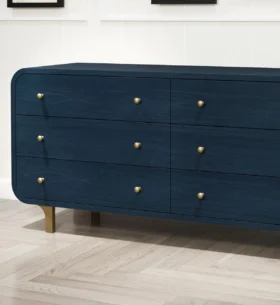
Dark blue wood dresser with brass hardware displayed in a showroom, highlighting the furniture's painted wood finish and clean, rounded edges.

Product trials turn interest into adoption (India)

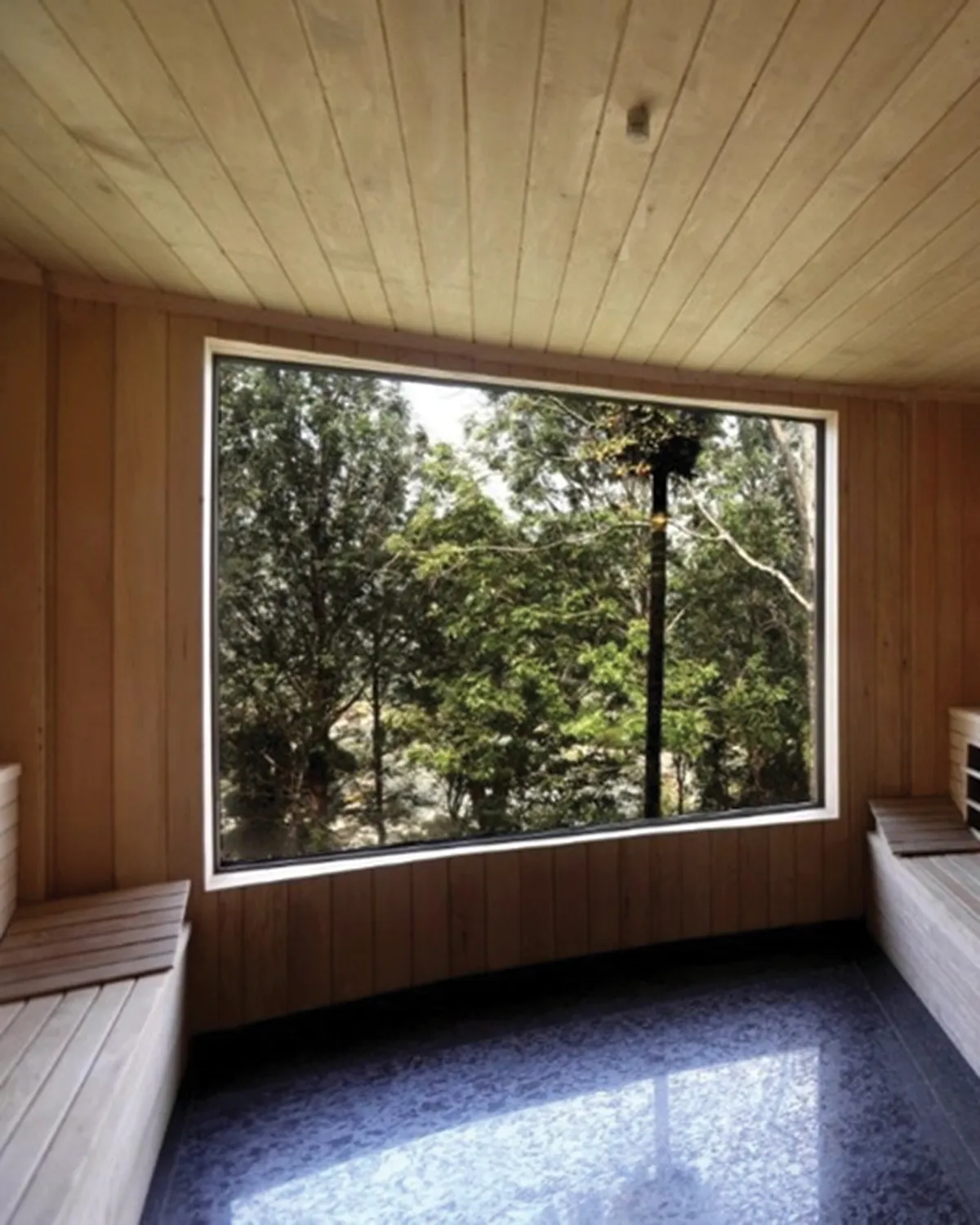
Wood sauna with bench seating and a large window overlooking trees, creating a strong visual connection to the surrounding forest.

Product trials, organized by FII India, demonstrate real-world outcomes, validate technical suitability and reduce perceived risk.

FII India uses product trials to demonstrate how B.C. species perform under local conditions and meet customers’ requirements by pairing hands-on testing with technical guidance. They are essential tools for accelerating the adoption of B.C. wood species, particularly underused Coastal hemlock.

Evavo Wellness:
Saunas at world-class hotels
With FII India’s support, Evavo Wellness has brought B.C. wood into India’s luxury market, completing more than 10 high-end sauna projects for top hotels and wellness facilities. FII has built its relationship with Evavo over almost a decade, from initial meetings at trade events to educational seminars, technical support and material guidance—including a full mock-up sauna at Evavo’s Mumbai showroom. Evavo incorporates western red cedar and western hemlock in its sauna projects for their durability, dimensional stability and visual appeal. The company is now exploring new production opportunities with a major Indian bathroom fittings manufacturer, signalling growing commercial interest in B.C. wood.

Evergreen International:
Furniture for international markets
Evergreen International, one of India’s largest integrated furniture exporters, is using western hemlock across several product categories. FII India began collaborating with Evergreen in 2024 and has provided ongoing technical support. Following the success of an initial six-drawer dresser, Evergreen has expanded the use of western hemlock across additional product categories for international buyers.

Photos: western hemlock bench, Evergreen international; Hemlock sauna, Evavo Wellness | Crdit: FII India

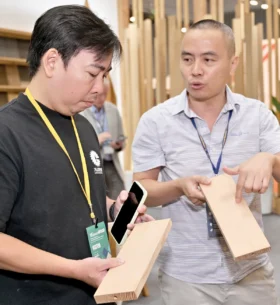
Two attendees examine and compare wood product samples at an industry trade show, discussing material characteristics while standing in front of a wood display

Using trade shows to accelerate market development (Vietnam)

Trade shows offer a valuable platform for building relationships and gaining real-time market insight, allowing manufacturers and buyers to connect and assess the commercial potential of B.C. wood in Vietnam’s manufacturing sector. In 2025/26, FII Vietnam engaged with leading stakeholders across the wood and furniture sectors at three major trade shows. These high-profile events attract national media attention and provide a platform to maintain visibility and dialogue with manufacturers, designers, sourcing partners, and end-market buyers.

Continue reading >

Photo: FII Vietnam

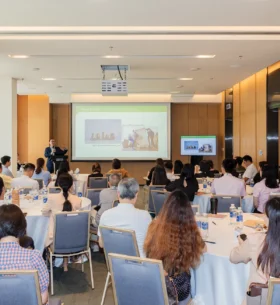
Participants attend a seminar on wood products and manufacturing, with a presenter speaking beside a screen displaying technical information and product examples.

Getting to know hemlock (Vietnam)

FII Vietnam hosts seminars to introduce Vietnam’s furniture manufacturers and designers to hemlock’s properties and practical applications. This includes sharing data from third-party tests against established furniture standards showing that hemlock meets all of the performance requirements for strength and durability. In 2025/26, 40 representatives of export furniture manufacturers, design firms and stockists attended FII-hosted seminars to learn about hemlock’s performance and applications. These efforts have already led to three new hemlock product trials and additional requests for technical training from wood wholesalers.

Photo: FII Vietnam

For an overview of our recipient projects completed in 2025/26, please download our Year in Review

Download Year in Review (PDF)