Interest in mass timber construction has grown in recent years. However, there has been limited research in B.C. on the social and workplace impacts of these buildings, particularly for the wellbeing of occupants.
To help address this gap, Forestry Innovation Investment funded a study to better understand how mass timber and biophilic design can influence employee wellbeing in office buildings. The study focuses on The Exchange, a mass timber commercial development in Kelowna, B.C., and contributes to a growing evidence base on the social and workplace benefits of wood-based construction.
Callout: Biophilia refers to the innate affinity that humans have for nature. Biophilic design aims to connect occupants to nature through the inclusion of natural features in buildings.
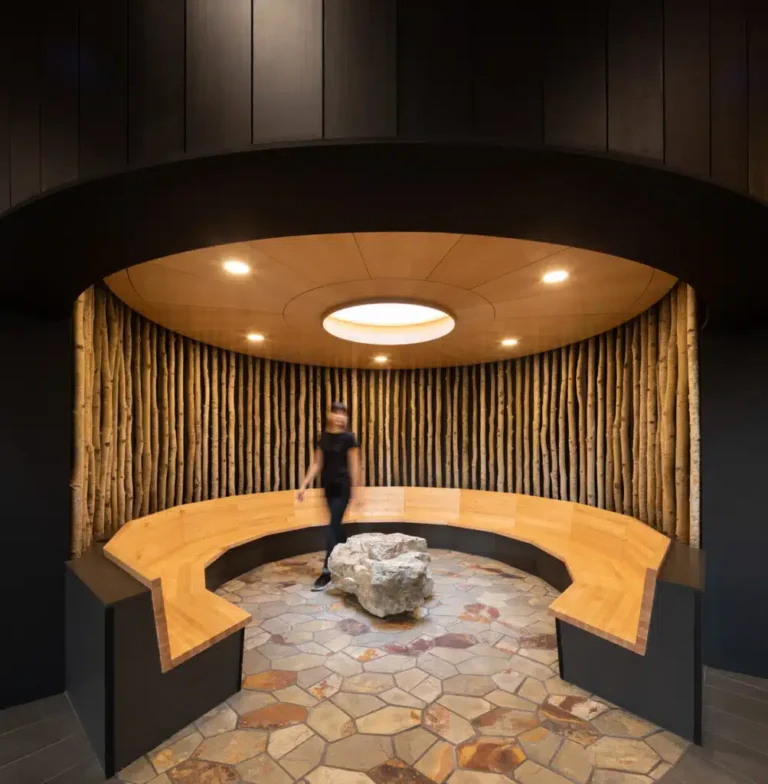
Carried out by urban research firm Happy Cities, the post-occupancy evaluation examined two mass timber office buildings completed in 2024. Using a combination of site visits, interviews, and employee surveys, the study assessed how features such as exposed wood, natural light, views to nature, and indoor plants affect workplace experience, satisfaction, and wellbeing.
The findings point to consistently high levels of employee satisfaction, particularly with natural daylight and exposed wood surfaces. Employees reported improved mental wellbeing, stronger collaboration, and more positive overall work experiences compared to previous office spaces. Satisfaction with visible wood surfaces was strongly associated with better at‑work experiences, reinforcing the role that mass timber and biophilic design can play in creating healthier, more engaging workplaces.
By commissioning studies like this, FII is helping generate practical, B.C.‑based evidence to support informed decision‑making by designers, developers, employers, and policymakers considering mass timber construction for commercial buildings.
To explore additional research funded by FII, visit the B.C. Research Library.