British Columbia has become a global leader in wood design and construction. Over the past several years, it has also emerged as an important centre for biophilic research and application, building a growing body of knowledge on how wood can support well-being in the built environment.
Biophilic design is an architectural approach that intentionally integrates nature, natural materials, and organic patterns into the built environment to improve health and well-being
That work has not been limited to a single study or project. Instead, a series of publications released between 2022 and 2026 has helped advance biophilic design with wood from scientific research to practical implementation.
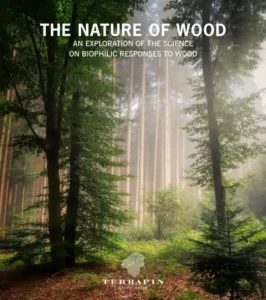
Beginning with Biophilia and the Nature of Wood in 2022, the publication explored the science behind biophilia, examining why people respond positively to wood. By exploring the physiological and psychological impacts of wood in the built environment, it helped establish a scientific foundation for understanding wood as more than a structural material and highlighted its potential role in shaping the user experience. Many B.C. projects are used as examples throughout, such as the Earth Sciences Building Atrium at the University of British Columbia in a section on the visual benefits of natural materials. The publication cites the building’s use of laminated strand lumber and Douglas-fir glulam beams and columns to conceal connections so as not to distract from the rich patterns of the exposed wood structure.
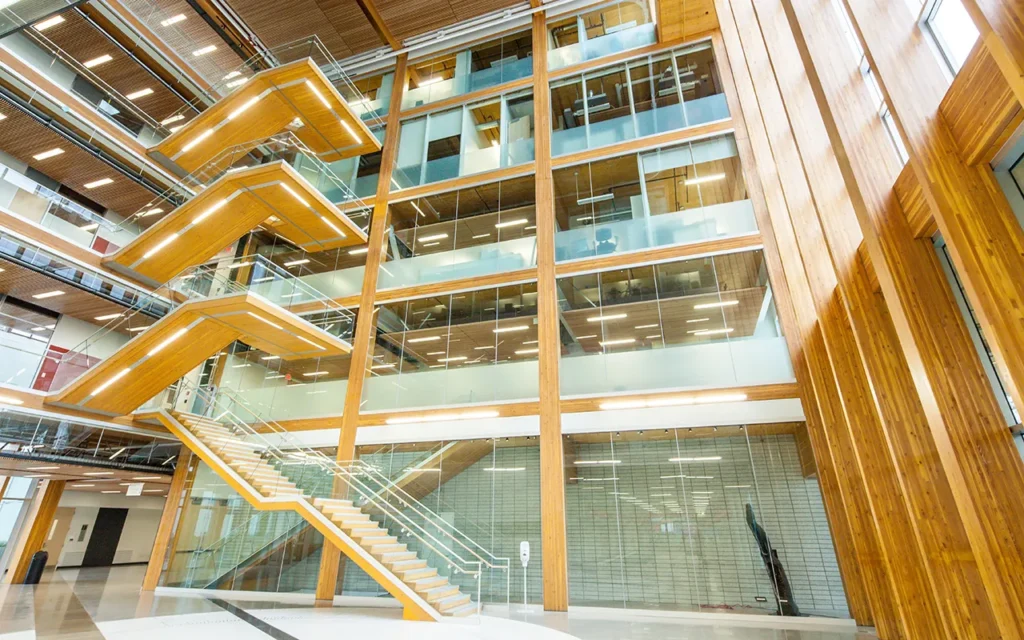
Photo: KK Law, courtesy naturallywood.com

That foundation informed the next phase of work. Released in 2024, Biophilic Design with Wood in British Columbia moved the discussion from theory to real-world examples. Developed by Terrapin Bright Green in collaboration with FII, the publication explored B.C.’s longstanding use of wood in the built environment and examined how wood can support biophilic design. Drawing on projects from across the province, it demonstrated how wood can help express key biophilic design patterns while offering practical considerations for designers seeking to strengthen connections to nature within buildings.

In 2025, Biophilic Design in Mass Timber Buildings: The Exchange moved the conversation from design intent to measurable outcomes. Through a post-occupancy evaluation of a completed mass timber office building in Kelowna, B.C., the study explored how biophilic design features, including exposed wood, natural light and connections to nature, influenced occupant experiences. The findings pointed to high levels of employee satisfaction and positive workplace experiences, contributing to a growing body of B.C.-based evidence on the benefits of mass timber and biophilic design.
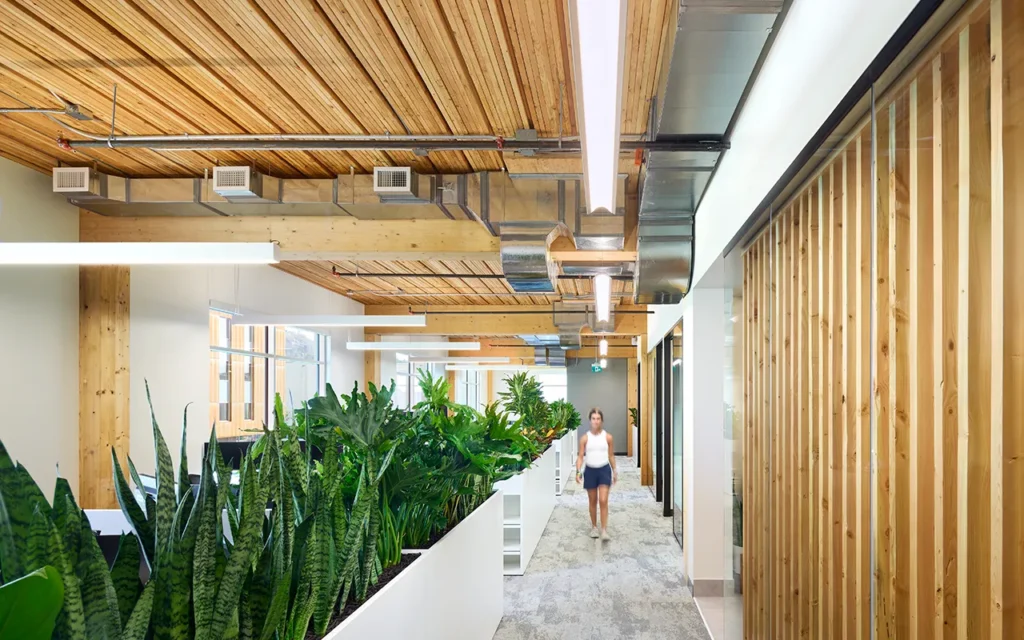
The Exchange is a four-building development in downtown Kelowna’s north end. With its exposed mass timber structure, this mixed-use office and commercial project was designed to attract tenants with its sustainability and industrial vibe, while supporting local business through its construction. It offers proof-of-concept for nail-laminated timber (NLT) manufactured onsite, validating mass timber for high-performance buildings capable of meeting Step 3 of the BC Energy Step Code. Photo: Ed White Photographics, courtesy naturallywood.com
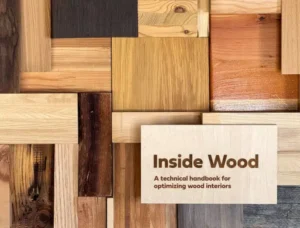
Most recently, Inside Wood, released in 2026, translated research and project experience into practical guidance for the design community. As architects and designers work to balance aesthetics with performance and code requirements, Inside Wood provides technical guidance on the use of exposed wood in interior spaces. It represents an important next step: helping practitioners apply lessons from research and completed projects to future buildings.
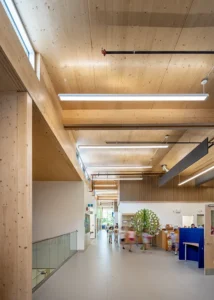
The publication pairs technical guidance with real-world examples. Take Bayview Elementary School in Vancouver, for example. The project demonstrates how gaps at panel edges can accommodate movement at panel-to-panel connections. In its guidance on finishes and treatments, the publication returns to the school to show how a coating helped the exposed cross-laminated timber walls and ceilings meet fire-safety requirements.
Bayview Elementary School, Vancouver | Photo: Michael Elkan Photography, courtesy naturallywood.com
Viewed together, the four publications tell a larger story. They follow a progression from understanding why people respond positively to wood, to exploring how biophilic principles can be applied in buildings, to proving their impact in occupied spaces and, most recently, supporting implementation through practical technical guidance. This growing body of research, case studies, performance evidence and design resources reflects a broader effort to build the expertise, knowledge and tools needed to advance biophilic design with wood.
As interest in low-carbon buildings that support healthy occupant and user environments continues to grow, FII continues to build on that foundation by funding further research into wood’s biophilic benefits, such as post-occupancy evaluations. The findings will add to a growing body of B.C.-based research on biophilic design, helping inform future projects.
Explore the naturally:wood Biophilic Design Toolkit to download all four publications.